

IFTA Late Filing Penalty: Exact Fines, Interest Calculations, and Delinquent Return Guide
Missed your quarterly IFTA fuel tax deadline? Learn the exact IFTA late filing penalty rules ($50 or 10%), interest rates, and follow a 5-step recovery guide.
Quick Answer: What Is the IFTA Late Filing Penalty?
If you miss a quarterly deadline under the International Fuel Tax Agreement, your base jurisdiction will immediately assess an ifta late filing penalty. Under the official rules maintained by IFTA, Inc., the standard penalty is $50 or 10% of your net delinquent tax liability, whichever amount is greater.
Key facts every motor carrier and owner-operator must know before filing late:
- **The
50 Minimum Applies Even on Zero-Tax Returns**: If you drove zero miles or are owed a refund, you must still pay the minimum50 ifta late filing penalty if your return is filed past the deadline. - Accruing Monthly Interest: In addition to the flat penalty, interest accrues on all unpaid taxes at a statutory rate of 0.4167% per month (5% annualized) under IFTA Articles of Agreement Section R1230.
- No Grace Period: Jurisdictions do not grant informal grace periods. If your report is postmarked or e-filed even one minute past midnight following the due date, the ifta late filing penalty triggers automatically.
- Quarterly Deadlines: IFTA reports are due on the last day of the month following the close of each calendar quarter (April 30, July 31, October 31, and January 31). When a deadline falls on a Saturday, Sunday, or legal state holiday, the deadline extends to the next business day.

Below is an overview comparing how the penalty is assessed across different tax scenarios and member jurisdictions.
Penalty Comparison Across Jurisdictions and Tax Liabilities
While the base formula for the ifta late filing penalty is standardized across all 48 contiguous U.S. states and 10 Canadian provinces through the IFTA Articles of Agreement, enforcement actions and electronic filing rules vary slightly by base state.
| Jurisdiction / Authority | Base Penalty Formula | Penalty on $250 Tax Due | Penalty on $1,500 Tax Due | Zero Miles / Refund Returns | Key Enforcement Consequence |
|---|---|---|---|---|---|
| IFTA Standard Baseline (IFTA, Inc.) | Greater of $50 or 10% net tax due | $50 (Minimum threshold) | $150 (10% applies) | $50 mandatory penalty | Account flagged for delinquency |
| Illinois (IDOR MFUT) | Greater of $50 or 10% net tax due | $50 | $150 | $50 mandatory penalty | Electronic MyTax filing locked; license suspension |
| Texas (Texas Comptroller) | Greater of $50 or 10% delinquent tax | $50 | $150 | $50 mandatory penalty | Webfile delinquency flag; bond requirement on reinstatement |
| Colorado (Colorado Dept of Revenue) | Greater of $50 or 10% tax due | $50 | $150 | $50 mandatory penalty | Revocation of decals; mandatory electronic filing penalties |
| California (CDTFA Fuel Tax) | Greater of $50 or 10% net tax due | $50 | $150 | $50 mandatory penalty | Immediate citation risk at CHP inspection points |
When you miss a quarterly reporting window, the total cost involves more than just the baseline ifta late filing penalty. You face monthly interest, administrative processing fees, and vehicle operating risks.
5 Steps to Resolve a Late IFTA Return
Filing a late return can feel stressful, but ignoring a missed deadline compounds the damage. Follow this five-step action plan to calculate your ifta late filing penalty, submit your records, and restore your carrier credentials to good standing.
Step 1: Confirm Your Missed Deadline and Past-Due Days
Your first priority is identifying exactly which quarter was missed and determining how many days have elapsed since the official cutoff. Check the official filing schedule:
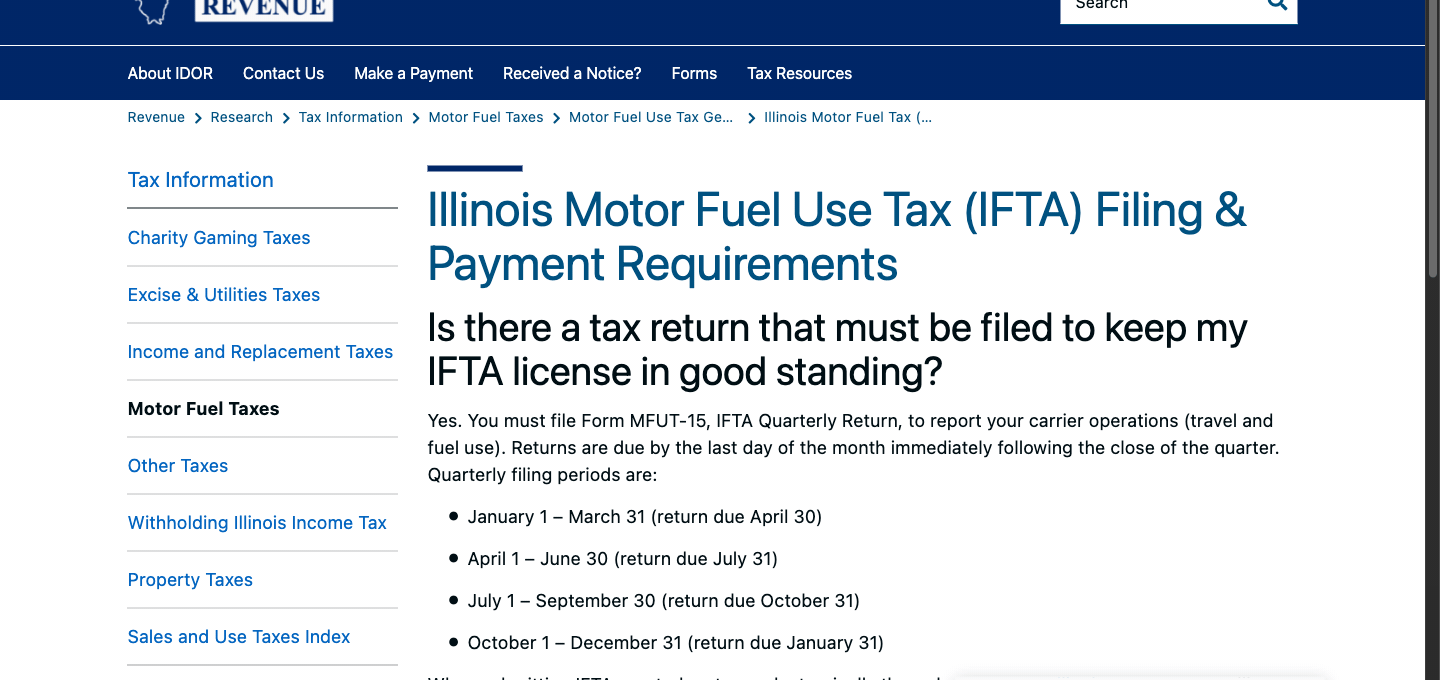
- 1st Quarter (Jan 1 – Mar 31): Due April 30
- 2nd Quarter (Apr 1 – Jun 30): Due July 31
- 3rd Quarter (Jul 1 – Sep 30): Due October 31
- 4th Quarter (Oct 1 – Dec 31): Due January 31
If the closing day of the month fell on a weekend or state holiday, your statutory due date shifted to the following Monday. Confirming the exact postmark or digital submission timestamp determines how many full or partial months of interest will attach to your ifta late filing penalty.
Step 2: Reconstruct Fuel Receipts and Jurisdiction Mileage
Do not guess or estimate your fleet numbers. Even when facing an ifta late filing penalty, filing an inaccurate or fabricated return will expose your operation to audit penalties.
Gather and cross-reference your records:
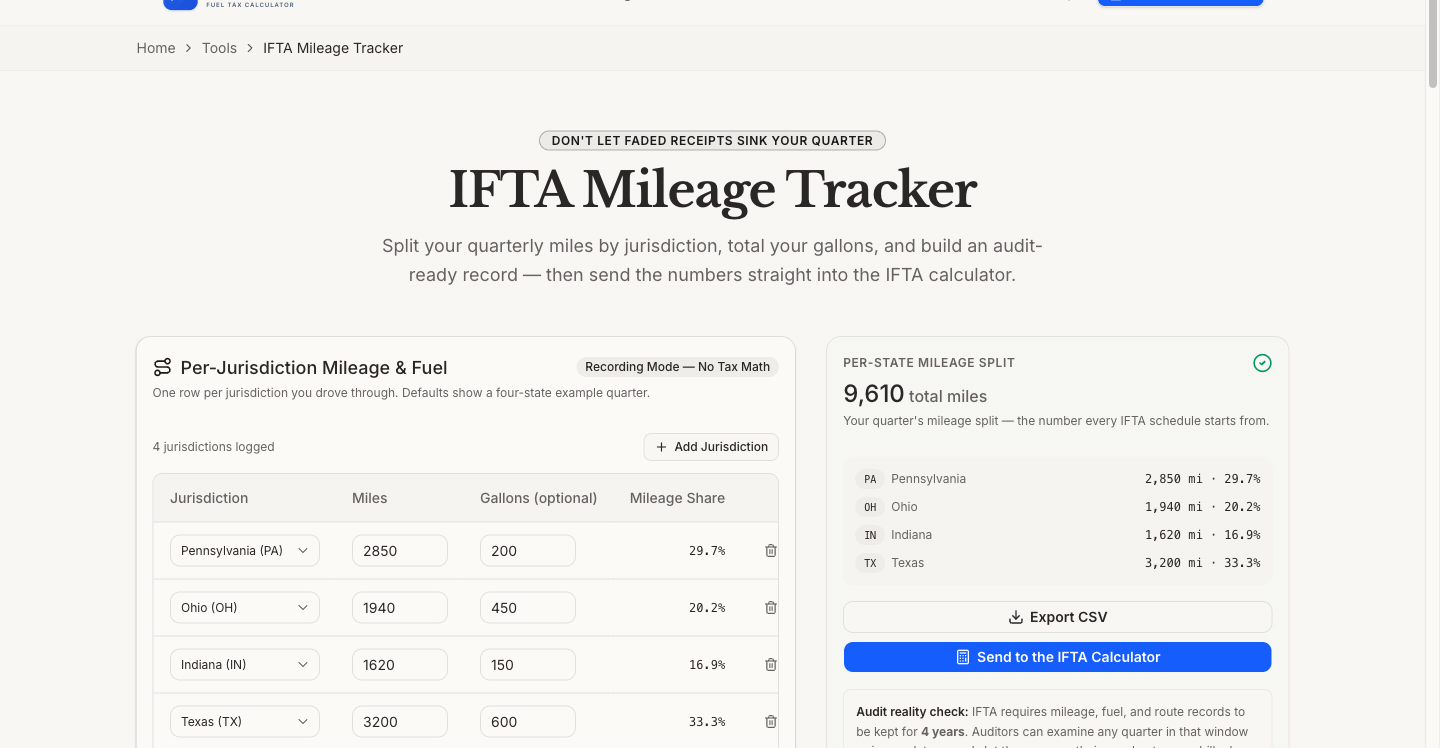
- ELD & GPS Logs: Export state-by-state mileage breakdowns for all qualified motor vehicles in your fleet.
- Paid Fuel Invoices: Collect every physical receipt and fuel card statement showing gallons purchased, date, seller name, tax paid, and vehicle unit number.
- Total Fleet Mileage & Fleet Gallons: Sum all interstate and intrastate travel to establish your quarterly overall fleet miles-per-gallon (MPG).
If you find administrative record-keeping overwhelming during quarter-end crunches, using an automated solution like the IFTA mileage tracker helps keep mileage logs audit-ready and prevents recurring late submissions.
Step 3: File Your Delinquent Return Through Your Base State Portal
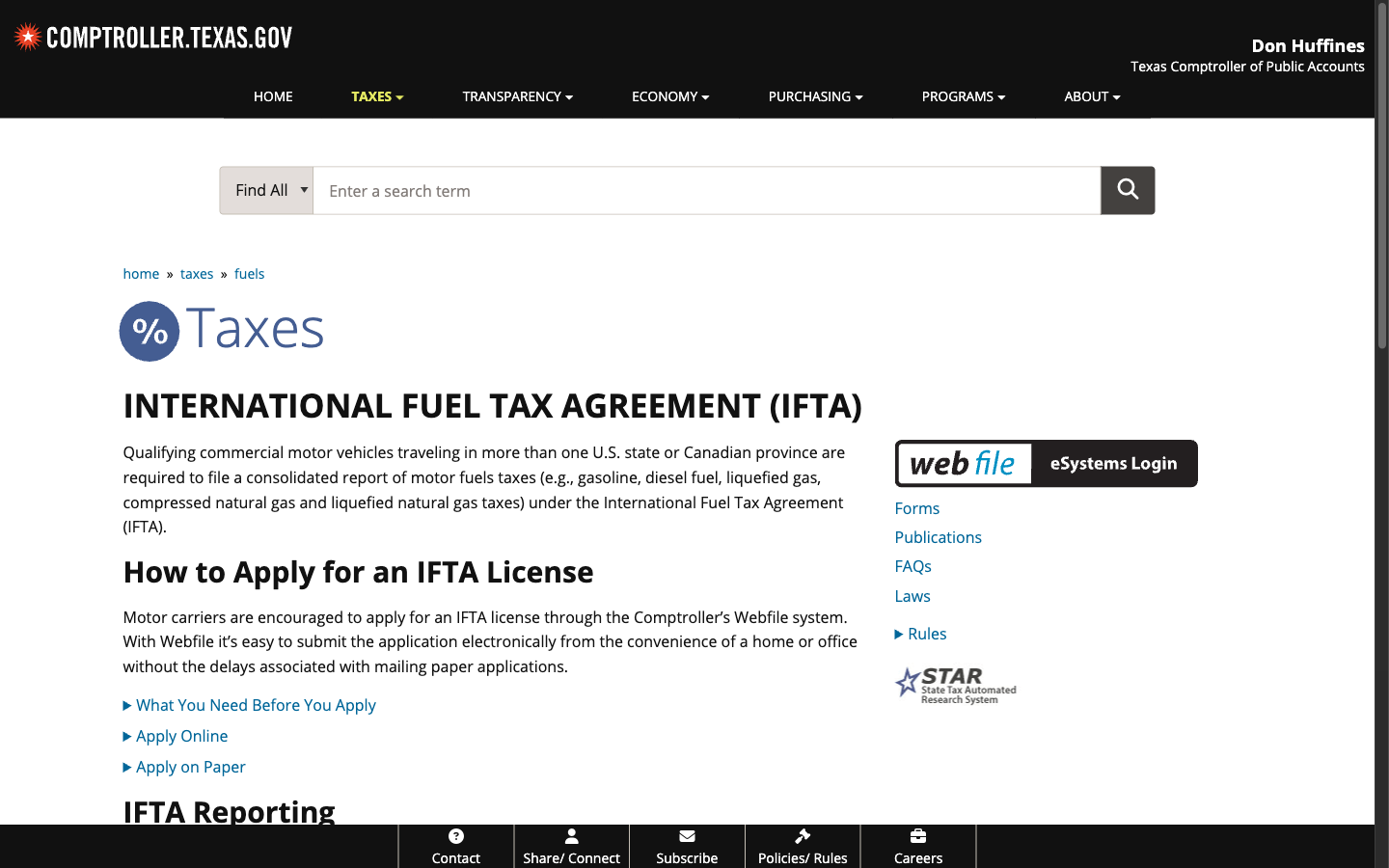
Nearly all member jurisdictions mandate electronic submission for past-due quarterly returns. Log into your base jurisdiction's motor carrier portal (such as MyTax Illinois, Texas Webfile, or California CDTFA Online Services).
Enter your total miles, taxable miles, and tax-paid gallons by member jurisdiction. The state portal will automatically calculate your net fuel tax liability across all jurisdictions. Once submitted, the system will apply the standard ifta late filing penalty to your balance sheet.
Step 4: Calculate and Pay the Penalty Plus Accrued Interest
Review the final invoice before transmitting payment. Your delinquent remittance will consist of three separate line items:
- Net Fuel Tax Balance: The sum of taxes owed to jurisdictions where you consumed more fuel than you bought, offset by fuel tax credits from jurisdictions where you bought excess fuel.
- The IFTA Late Filing Penalty: The statutory $50 minimum, or 10% of the positive net tax balance (whichever is larger).
- Statutory Interest: Calculated under IFTA Article R1230.100 at 0.4167% per month. Any fraction of a month counts as a full month for interest purposes.
Pay the full amount immediately via ACH debit, electronic check, or credit card. Partial payments will leave your account in delinquent status, which continues the interest accumulation and leaves you vulnerable to enforcement stops. To keep operating costs predictable and monitor tax burdens against route profits, many operators evaluate their overall numbers using a dedicated trucking cost per mile calculation.
Note: IFTADesk is our product; we've kept this guide factual and objective.
Step 5: Request Penalty Abatement (If You Have Reasonable Cause)
Can you remove an ifta late filing penalty once assessed? Under strict circumstances, yes. Most base jurisdictions permit carriers to submit a formal written Request for Penalty Abatement if the late filing resulted from documented "reasonable cause" rather than willful neglect.
Legitimate grounds for penalty abatement typically include:
- Severe natural disaster, catastrophic weather, or office destruction (with insurance or emergency declarations).
- Documented severe illness or incapacitation of the sole proprietor or compliance officer.
- Base state portal technical outage verified and documented by state IT support tickets.
Circumstances that are not accepted as reasonable cause include lack of funds, reliance on an external third-party accountant who forgot, or claiming unfamiliarity with quarterly deadlines. To request abatement, remit your delinquent tax and interest first, then submit a formal letter detailing the timeline, evidence, and preventative steps you have implemented to prevent another ifta late filing penalty.
Warnings: The Real Consequences of Ignoring an IFTA Delinquency
Some operators mistakenly believe that a $50 fine is a minor expense that can wait until the end of the year. In interstate trucking, an unpaid ifta late filing penalty triggers a chain reaction of administrative and operational crackdowns.
1. Decal Invalidation and License Revocation
If your quarterly return remains past due, your base jurisdiction will issue a statutory notice of tax delinquency. Failure to cure the account results in formal revocation of your IFTA license. When your license is revoked, your external vehicle decals become legally void.
2. Roadside Enforcement Citations & Forced Trip Permits
Operating an apportioned commercial motor vehicle with a suspended or revoked IFTA credential is a serious roadside offense. During routine weigh station stops or roadside Department of Transportation (DOT) inspections, law enforcement officers verify your IFTA status through the national clearinghouse database.
If your account shows active revocation from an unresolved ifta late filing penalty:
- Officers can issue roadside citations ranging from
500 to over1,000 per violation. - Your vehicle can be placed out of service at the port of entry until you purchase a temporary fuel trip permit.
- Temporary trip permits cost between
30 and65 per state and typically remain valid for only 72 to 120 hours. Crossing multiple states without IFTA can easily cost hundreds of dollars per day in one-off permits.
3. The 4.0 MPG Penalty Audit
Chronic delinquencies trigger mandatory state compliance audits. If an auditor examines your records and finds that your missing return cannot be backed up with compliant trip sheets, state statutes empower the auditor to recalculate your fuel liability using a default rate of 4.0 miles per gallon (or a 20% reduction of reported MPG). For a fleet averaging 6.5 to 7.0 MPG, an arbitrary reduction to 4.0 MPG will double or triple your historical fuel tax bill, plus additional fraud penalties.
For comprehensive federal tax compliance and regulatory alignment for heavy highway vehicles, carriers should also consult the IRS Trucking Tax Center to ensure Form 2290 Heavy Highway Vehicle Use Tax filings remain in sync with fuel tax reporting.
Best Practices to Prevent an IFTA Late Filing Penalty
To ensure your fleet never faces another ifta late filing penalty, adopt these routine administrative habits:
- Schedule Standing Calendar Milestones: Mark the 15th day of every reporting month (April 15, July 15, October 15, January 15) as your reconciliation cutoff date. Having your numbers reconciled two weeks early prevents last-minute portal crashes.
- Digitize Receipts at the Pump: Require company drivers and owner-operators to photograph fuel receipts at the point of sale. Faded thermal paper is the primary reason late filers fail audit reconstructions.
- Automate Odometer Jurisdictional Splits: Use certified telematics to separate taxable highway miles from non-taxable off-road or private property miles accurately.
- Always File Even If Broke: If cash flow is tight, submit your return on time regardless. Filing on time avoids the ifta late filing penalty and limits your financial exposure strictly to statutory interest on the unpaid tax portion.
Frequently Asked Questions
What is the exact penalty for filing an IFTA return late?
Under the IFTA Articles of Agreement, the standard ifta late filing penalty is $50 or 10% of the total delinquent tax due, whichever amount is greater. In addition, statutory interest accrues on unpaid taxes at a rate of 0.4167% per month (5% annually) from the original deadline until payment is complete.
Do I still have to pay the $50 late filing penalty if I owe zero tax or had no operations?
Yes. The 50 minimum ifta late filing penalty applies to all late returns, including "zero-mile" reports and returns where the carrier is owed a net tax credit. Failing to file an informational return by the quarterly due date constitutes a reporting violation subject to the flat 50 charge.
How is late filing interest calculated on past-due IFTA taxes?
Interest is calculated monthly on the net delinquent tax balance owed to all member jurisdictions. The statutory rate is 0.4167% per month (5% per year). Any fraction of a calendar month is treated as a full month. For example, if you owe 1,000 in fuel tax and file 12 days late, you will owe the 100 penalty (10%) plus one full month of interest (4.17), bringing the total past-due payment to 1,104.17.
Can I get an IFTA late filing penalty waived or abated?
Yes, motor carriers can request a penalty abatement by submitting a written explanation with supporting documentation to their base jurisdiction. Relief is generally granted only if you demonstrate "reasonable cause," such as a natural disaster, medical emergency, or an official base state portal failure. Financial hardship or employee oversight are not accepted as valid excuses.
What happens to my IFTA license and decals if I miss the filing deadline?
If you miss a deadline, your base jurisdiction will issue a notice of delinquency. If you do not submit the return and pay the ifta late filing penalty, your base state will revoke your IFTA license. Operating commercial vehicles with revoked decals exposes you to roadside citations up to $1,000, vehicle impoundment, and the requirement to purchase temporary single-trip fuel permits in each state you cross.
Estimate Your Penalty
Want the dollar figure before you file? Open our IFTA penalty calculator to run the 50-or-10% formula and monthly interest against three worked examples, from a 250 balance to a zero-mileage quarter. It takes under a minute and pairs with the recovery steps above.