

Load Planning Software & 3D Pallet Trailer Space Optimizer
Simulate 3D pallet arrangements, calculate volumetric cubic utilization, and optimize loading sequences for dry vans, reefers, and intermodal containers with zero wasted trailer space.
Comprehensive Load Planning Software & Cargo Guide
Master 3D trailer space optimization, pallet loading configurations, and cargo securement regulations to maximize every run.
1. 53ft Pallet Configurations in Load Planning Software
A standard 53-foot dry van trailer measures 630 inches in internal length and 98.5 to 100 inches in interior width. When loading standard GMA (Grocery Manufacturers Association) 48" x 40" pallets, loading straight (48-inch length aligned along trailer length) fits exactly 26 pallets on the floor across 13 rows of 2 pallets side by side (40" + 40" = 80" width, leaving 18–20" margin).
By turning pallets 90 degrees (turned loading, where 48-inch width fits across the trailer width: 48" + 48" = 96"), carriers can fit up to 30 pallets in a single tier (15 rows of 2), provided the internal wall width exceeds 98.5 inches and cargo overhang is zero. This turned orientation increases single-tier pallet capacity by 15.4%, significantly boosting billable revenue on high-density freight without adding extra road miles.
However, turned loading requires strict quality control over pallet condition. Damaged bottom stringers or pallet overhang exceeding 1 inch can wedge freight tightly against trailer scuff plates, causing severe unloading delays and potential cargo claims at receiving docks. Load planners must also verify that forklift entry points match warehouse handling capabilities, as turned pallets require 4-way forklift tine access at destination docks.
2. Pinwheel Pallet Layouts in Load Planning Software
Pinwheel loading alternates one pallet loaded straight alongside one pallet turned sideways across each consecutive row down the trailer length. This layout accommodates 28 pallets in a standard 53ft dry van while interlocking the freight tightly against the sidewalls.
The primary mechanical advantage of pinwheeling is the virtual elimination of lateral cargo sway during aggressive highway steering maneuvers. Because pallets interlock across alternating centerlines, friction between pallet sides prevents the tipping often seen when straight-loading narrow, top-heavy cargo.
Forklift operators must be trained on alternating entry points because pinwheel rows require engaging pallets from both 4-way and 2-way entry sides. Providing visual 3D loading blueprints ensures warehouse loading teams place every pallet in the precise orientation required for transit stability and optimal weight balance.
3. Double-Stacking Analysis Using Load Planning Software
Double-stacking pallets allows motor carriers to maximize volumetric cubic utilization when transporting lightweight freight (such as corrugated boxes, paper towels, insulation, or snack foods). To execute double-stacking safely and legally, the combined stack height must remain below internal ceiling and roll-up door thresholds (standardly 104 to 110 inches).
Furthermore, the bottom tier of pallets must possess dynamic compression ratings capable of supporting the full weight of the top tier under 0.5g vertical road shock. Never double-stack hazardous materials, fragile liquid totes, or irregular machinery without dedicated decking beams or load tier separators.
Utilizing anti-slip tier sheets between stacked layers increases friction coefficients and dampens harmonic road vibration, ensuring the upper tier does not shift or crush lower packaging cartons during long-distance interstate transit over rough highway bridge expansion joints.
4. FMCSA Cargo Securement Standards (49 CFR 393.100)
Federal Motor Carrier Safety Administration regulations dictate that cargo securement systems must withstand dynamic forces of 0.8g deceleration forward, 0.5g rearward, and 0.5g laterally. When trailer floor space is not fully packed door-to-door, drivers must employ load lock bars, horizontal E-track ratchet straps, or inflatable friction dunnage bags.
Failing to block and brace partial loads constitutes an immediate FMCSA roadside violation, exposing the carrier to cargo damage claims and severe safety point penalties under the Driver/Vehicle Inspection Compliance BASIC category.
Inspectors specifically verify that blocking timbers are nailed securely to wooden trailer floorboards using double-headed nails and that synthetic polyester webbing straps show zero fraying, tears, or broken ratcheting hardware when securing high-value freight.
5. Reefer Airflow Rules in Load Planning Software
Refrigerated trailers require continuous airflow circulation around the entire cargo envelope. Shippers and loaders must maintain at least 4 inches of unobstructed clearance beneath the ceiling air chute and utilize ribbed duct flooring to allow returning cold air to reach the nose refrigeration compressor.
Overpacking reefer trailers flush against interior insulated walls restricts convective heat transfer, creating internal thermal hot spots that result in spoiled produce, rejected dairy shipments, and costly reefer insurance cargo claims.
Drivers must also verify that reefer bulkhead return-air screens remain completely unobstructed by pallet shrink-wrap or loose dunnage, ensuring consistent core cargo temperatures and uninterrupted continuous refrigeration cycles throughout multi-day cross-country transit.
5. Axle Load Optimization and Sliding Tandem Repositioning
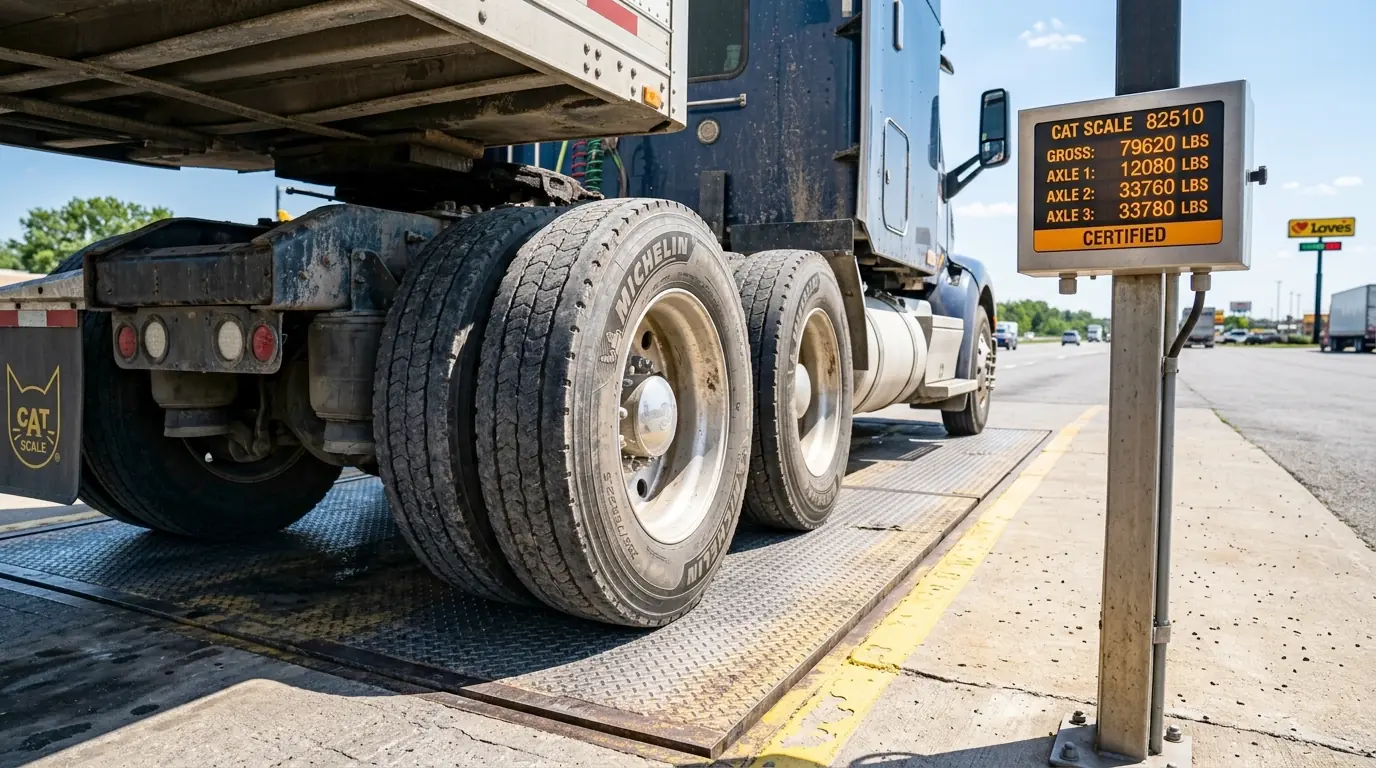
Achieving legal compliance on 53ft trailers requires balancing payload between the tractor drive axles (capped at 34,000 lbs) and trailer tandem axles (capped at 34,000 lbs). When heavy freight is loaded toward the nose, sliding the trailer tandem forward transfers weight onto the trailer axles while relieving pressure on the tractor drives.
Conversely, sliding the tandems rearward shifts weight back to the tractor drive axles. Each locking hole on a standard trailer slider rail shifts approximately 250 to 400 lbs between axle groups.
Pre-calculating pallet weight distribution before physical loading prevents drivers from having to break dock seals or return to loading facilities for re-palletization.
6. Intermodal Container Layouts with Load Planning Software
Intermodal ocean containers possess narrower door openings and interior widths (typically 92 to 93 inches) compared to domestic 53ft dry vans (100 inches). Standard 48x40 pallets cannot be turned side-by-side because 48" + 48" = 96", which exceeds container interior clearance.
A standard 40ft High Cube container accommodates exactly 20 standard GMA pallets loaded straight, or 24 Euro-pallets (1200mm x 800mm). Calculating container payload must also account for heavy ocean chassis tare weights, ensuring total road combination weights stay under 80,000 lbs.
When loading 20ft heavy containers, cargo must be centered directly over the container chassis tandem or tri-axle group to avoid overloading tractor drive tandems on highway bridge crossings.
7. Preventing Cross-Dock Inefficiencies with Pre-Planned Load Sequencing
Multi-stop LTL (Less-Than-Truckload) freight demands strict Last-In, First-Out (LIFO) loading sequences. Pre-planning load placement ensures that stop 1 freight is positioned directly at the rear doors, eliminating the need to unload intermediate freight on rainy docks to reach deeply buried pallets.
Using 3D load planning software generates visual loading manifests for forklift operators, cutting warehouse dock staging turnaround times by over 45 minutes per dispatch. Clear color-coded stop maps allow dockworkers to verify piece counts, hazardous material separations, and axle distribution before closing and sealing trailer doors.
For return backhauls, drivers can reference empty space diagrams to negotiate and book high-paying LTL partials on spot market load boards without fear of running out of floor space or exceeding bridge formula gross weight limits.
8. Frequently Asked Questions: Load Planning Software
A standard 53ft dry van accommodates 26 standard 48" x 40" GMA pallets loaded straight (13 rows of 2), or up to 30 pallets when loaded turned sideways (15 rows of 2).
Straight loading places all pallets facing in the same orientation. Pinwheeling alternates one straight pallet next to one turned pallet per row.
Yes, provided the individual pallet height is under ~50 inches (total stack under 104" door clearance) and bottom pallets can withstand the weight.
A 40ft High Cube ocean container fits 20 standard 48x40 GMA pallets or 24 standard Euro-pallets (1200mm x 800mm) single-tiered on the floor.
Volumetric utilization measures the percentage of total interior trailer volume (approx 4,000 cu ft for a 53ft van) occupied by freight.
Use commercial load lock bars, horizontal E-track ratchet straps, or inflatable dunnage bags to secure partial freight against the front bulkhead.
Reefer trailers feature thicker insulated walls (reducing interior width to ~97") and ceiling refrigeration chutes, restricting turned loading.
Last-In, First-Out (LIFO) loads the final delivery stop at the front nose and the first delivery stop at the rear doors for rapid unloading.